How to Inventory an Estate: A Practical Guide to the Stuff We Leave Behind
What things are worth, how to document them, who they should go to, and the mistakes that cost families the most.
How Did You Get Here?
At some point after the funeral, the phone calls, and the paperwork — you walk into the house. And it's all still there.
The bookshelves. The kitchen drawers full of things you don't recognize. A garage that hasn't been cleaned out in twenty years. China in the dining room that might be worth something — or might not. Jewelry in a box upstairs. Tools. Furniture. Art on the walls. A lifetime's worth of things that belonged to someone who isn't here to explain what any of it means or where it should go.
This is the part of estate settlement that catches families completely off guard. Not the legal paperwork. Not probate. The stuff.
People underestimate how much physical property a person accumulates over a lifetime. A three-bedroom house can take 40 to 80 hours to sort through. And that's before you answer the harder questions: What's this worth? Who wants it? What do we keep, sell, donate, or toss? Is any of it valuable enough to matter for the estate?
Most families handle this the hard way: guessing, arguing, and throwing things away they later wish they'd kept — or keeping things for years that turn out to have no real value.
But there is a better way. It starts with one principle: inventory first, decide later.
570 hours of death admin, finally in one place. — Good Grief is the secure executor portal for settling an estate.
Try Good Grief →
Why You Need to Inventory Before You Do Anything Else
Before you sell, donate, distribute, or throw anything away — you need to know what's there.
This isn't about being sentimental. It's about protection.
Executors have a legal obligation to account for estate assets, and that includes tangible personal property — everything from furniture and vehicles to jewelry and collectibles. If a beneficiary later asks, "What happened to Mom's ring?" or "Where did all the tools go?" you need an answer that's more than a shrug.
A proper inventory helps you:
Identify items that have real financial value versus sentimental value versus no value at all
Prevent family disputes by creating a documented record of what existed before anything was moved
Meet your obligations as executor — courts can require a formal accounting of personal property
Make informed decisions about what to sell, donate, keep, or distribute
The families who spend a weekend documenting before they start distributing save themselves months of conflict and regret.
How to Inventory an Estate (Without Losing Your Mind)
You don't need to become a professional appraiser. You need a system. Here's a five-step approach that works:
1. Go room by room
Don't try to do the entire house at once. Start with one room. Photograph everything. Note items that seem potentially valuable or that you know someone specifically wanted. Move to the next room when you're done. This keeps the process manageable and gives you natural stopping points.
2. Separate into categories
As you go, mentally sort items into four groups: potentially valuable (jewelry, art, antiques, collectibles), sentimental (family photos, letters, heirlooms), functional (furniture, appliances, tools), and everything else. This framework makes every downstream decision easier.
3. Don't guess at value — get help
That painting in the hallway might be worth $50 or $5,000. You truly do not know until someone who does tells you. For items that might have significant value, get a professional appraisal. For everything else, a quick photo and estimated range is enough. Some common surprises: vintage tools, mid-century furniture, old books (first editions especially), and costume jewelry that turns out not to be costume.
4. Document who wants what — before you distribute
If the will specifies certain items go to certain people, note that. If it doesn't (and most wills don't get that specific about personal property), document any requests from family members. This creates a record that protects you if disagreements come up later. Keep it neutral: just names, items, and dates.
5. Use a tool designed for this.
Spreadsheets work. Notebooks work. But doing this with pen and paper or a basic spreadsheet in 2026 is the hard way. There are platforms built specifically for cataloging personal property that make the process dramatically faster. We want to tell you about one we really like.
A Partner We Trust: SaveOR
We recently partnered with SaveOR, and after spending time with their team (including cofounder Matt), we want to share why.
SaveOR is an AI-powered home inventory platform that helps families document and manage all of their tangible personal property. You snap a photo, and their image recognition captures item details and estimated values automatically. You can add videos, voice stories, documents, note who should receive what, and organize everything by room.
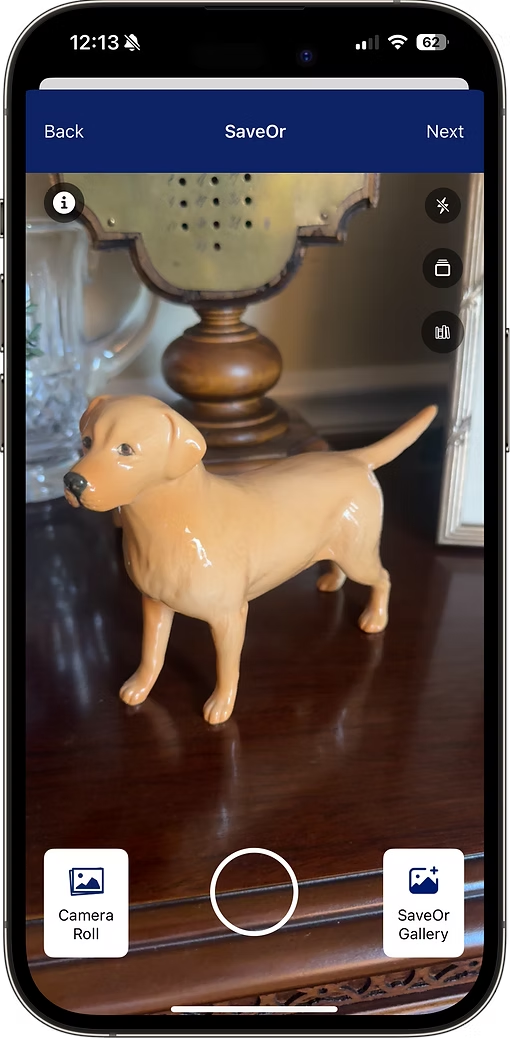
What we love about it: it works for both sides of the timeline
If you're planning ahead — downsizing, moving to a retirement community, or just getting your affairs in order — SaveOR lets you build a living inventory of your home. You can note which items go to which people, capture the stories behind meaningful objects, and make sure your family has a clear picture of what you own and what it's worth. That's a gift. Truly.
If you're sorting through someone's home after the fact — SaveOR turns what would be weeks of chaotic sorting into something organized and shareable. Multiple family members can collaborate from anywhere, which matters when siblings live in different states and can't all be in the house at the same time.
We're recommending SaveOR because they're solving a real problem in a modern, thoughtful way — and because the estate inventory step is one of the most underserved parts of the process. Most people are still doing this with cardboard boxes and guesswork. There's a better option now.
What Not to Do With Belongings
The inventory step protects you. Skipping it is where the real damage happens. Here are the most common mistakes:
Don't let people "take what they want" before the inventory.
This is how family fights start. Once things leave the house undocumented, they're gone. And if a beneficiary later claims something valuable is missing, you have no record to point to.
Don't assume nothing is valuable.
Families donate or trash items all the time that turn out to be worth significant money. Vintage furniture, old tools, costume jewelry that wasn't costume — surprises happen constantly. A quick inventory catches what a fast cleanout misses.
Don't rush the cleanout because you're paying the mortgage.
Yes, the ongoing costs of maintaining a property are real. But panic-clearing a house to save a month of expenses can cost you thousands in items you didn't properly evaluate. Budget for a few months of overlap. The math almost always works out in your favor.
Don't make permanent decisions in the first 30 days.
Grief and exhaustion make terrible advisors. If you're not sure what to do with something, the answer is almost always: document it, secure it, and decide later.
Deciding What to Sell, Donate, Keep, or Toss
Once you have your inventory, decisions become much easier. Here's a simple framework:
Get appraised first
Anything that might be worth more than a few hundred dollars deserves a professional opinion. This includes jewelry, fine art, antiques, coin or stamp collections, vintage items, and anything you can't easily price by searching online. An estate appraiser can often evaluate an entire household in a single visit. The cost (usually $300-$1,000 depending on home size) is almost always worth it.
Selling options
For items with real market value, you have several paths: estate sales (a company handles pricing, display, and sale of everything in the home), consignment shops (for furniture, art, and higher-value items), online marketplaces (for specific collectibles, electronics, or niche items), and auction houses (for fine art, antiques, or collections with significant value). Each has different timelines and commission structures. Estate sales are typically the most efficient for clearing a full household.
Donating
For functional items without significant resale value, donation is often the right call. Many organizations will pick up furniture and large items for free. Keep receipts — estate donations may be tax-deductible. But don't donate before you've inventoried. Once it's gone, it's gone.
The hardest category: sentimental items
These are the items that have no market value but infinite personal value. Family photos, letters, military medals, the quilt someone's grandmother made. There's no formula for these. The best approach: give family members time to identify what matters to them. Set a deadline (reasonable — not this week). If no one claims something, document it and decide together whether to keep, store, or let it go.
A note about the emotional side: Sorting through a loved one's belongings is genuinely one of the hardest parts of this process. It's okay to go slowly. It's okay to take breaks. It's okay to find yourself sitting on the floor of a bedroom holding something that smells like them, unable to move for twenty minutes. That's not weakness. That's love. Give yourself permission to feel it and keep going when you're ready.
A Checklist to Get You Started
If you're staring at a house full of belongings and don't know where to begin, here's your first weekend:
Secure the property. Change locks if needed. Make sure insurance is current.
Walk the entire house without touching anything. Just observe. Note the scale of what you're dealing with.
Pick one room to start. The bedroom or living room are usually easiest.
Photograph everything. Shelves, drawers, closets. Open everything. Capture it all.
Flag anything that looks potentially valuable. Don't research yet. Just flag.
Note anything a family member has specifically requested.
Repeat room by room. Budget 2-4 hours per room for a thorough pass.
Schedule a professional appraisal for flagged items within the first month.
You don't need to finish everything in a weekend. You just need to start. The act of documenting transforms an overwhelming situation into a manageable project.
Quick Reminder
Dealing with someone's belongings is one of the most emotional parts of estate settlement. It's also one of the most practical. Those two things don't have to be in conflict.
You can honor the person and still be methodical about their stuff. You can take your time and still make progress. You can ask for help and still be in control.
Start with one room. Take photos. Write it down. The rest will follow.
Have questions about inventorying an estate? Reach out to us. You're not in this alone.
Found this helpful? Check out our Executor checklist: first 30 days after a death.
Keep going. You're doing great.
-
Estate Settlement Checklist →
The complete executor's roadmap — every step from day one to closing the estate. -
What to Do With a House After Someone Dies →
Sell, keep, or transfer? The answer depends on probate, the mortgage, and the will. -
Accounts to Close After Death →
Bank accounts, credit cards, subscriptions — a complete checklist of what to cancel and when.